


The iconic Old-New Synagogue in the Jewish part of Prague is also home to the legend of the Prague Golem.
A Golem is a Jewish supernatural creature created by a holy man from clay. He is incomplete, in that he has no freewill and cannot speak. A giant, he is made for protection. In the sixteenth century, the Jews of Prague were being persecuted by Rudolph II, who was trying to enforce Christianity and the Maharal of Prague, Rabbi Löw was a mystical man, believed to hold special powers.
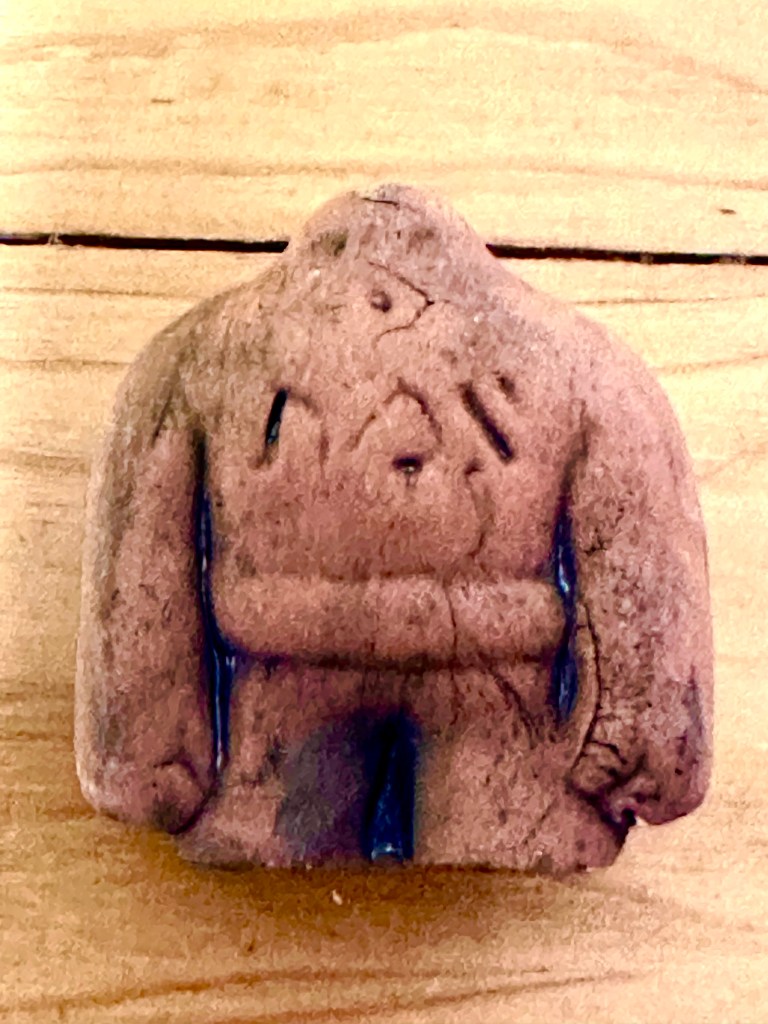
Löw created the Golem to protect his people in Prague. He brought the Golem to life by either writing Emet (meaning truth) onto the Golem’s forehead, or writing God’s name on a scroll (Shem) and placing it in the Golem’s mouth. No one knows for sure which life giving method he chose.
The Golem wreaked havoc on the non-Jewish population and grew ever stronger. The Rabbi promised to stop his creation if the Jews were left in peace. There are two ways a creator can stop his Golem – by removing the Shem, or rubbing out the first letter of the word Emet, which changed ‘truth’ to ‘death.’
For centuries the people of Prague were fairly certain this had happened. In 1909, a prominent local journalist entered the attic of the Old-New Synagogue which was supposed to have been Golem’s home. He declared all that was there were dusty old books and scrolls of the Jewish faith.
That said, local folklore talks of a Nazi officer who entered the attic of the synagogue, perhaps looking for treasure. Instead it is said he came face to face with the Golem and died under mysterious circumstances.
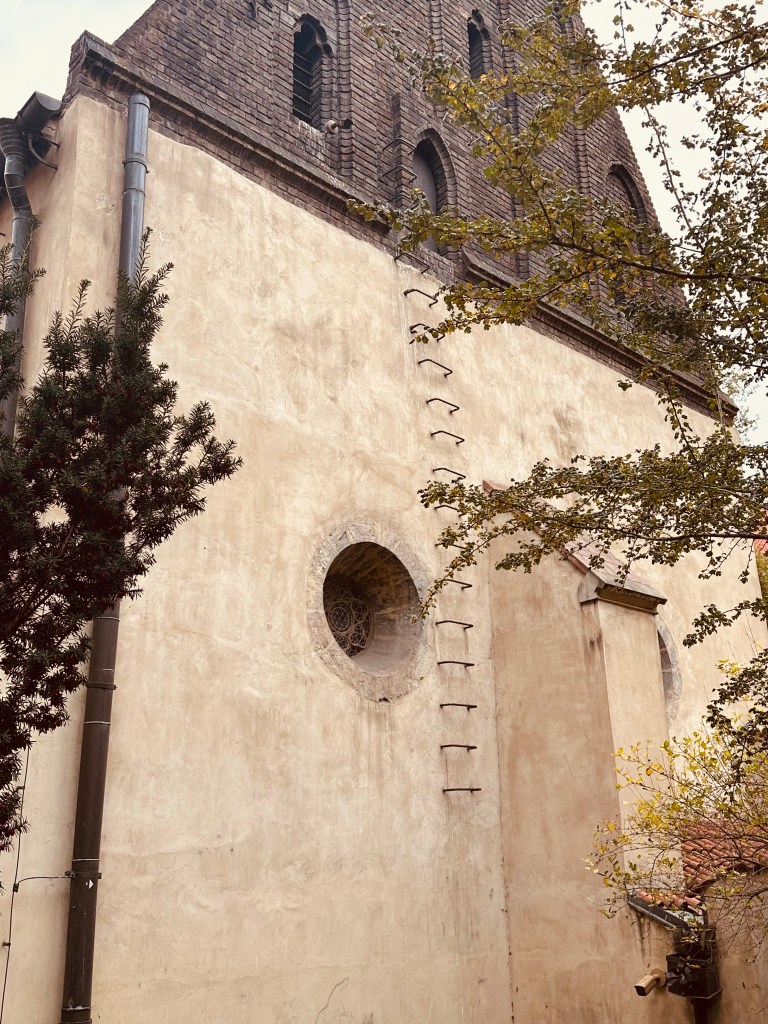
Others say the glowing eyed man of clay can still be seen in the darkness of Prague to this very day! On the outside of the synagogue you can see the steps built into the stonework, a path for the Golem to follow in and out of the attic…
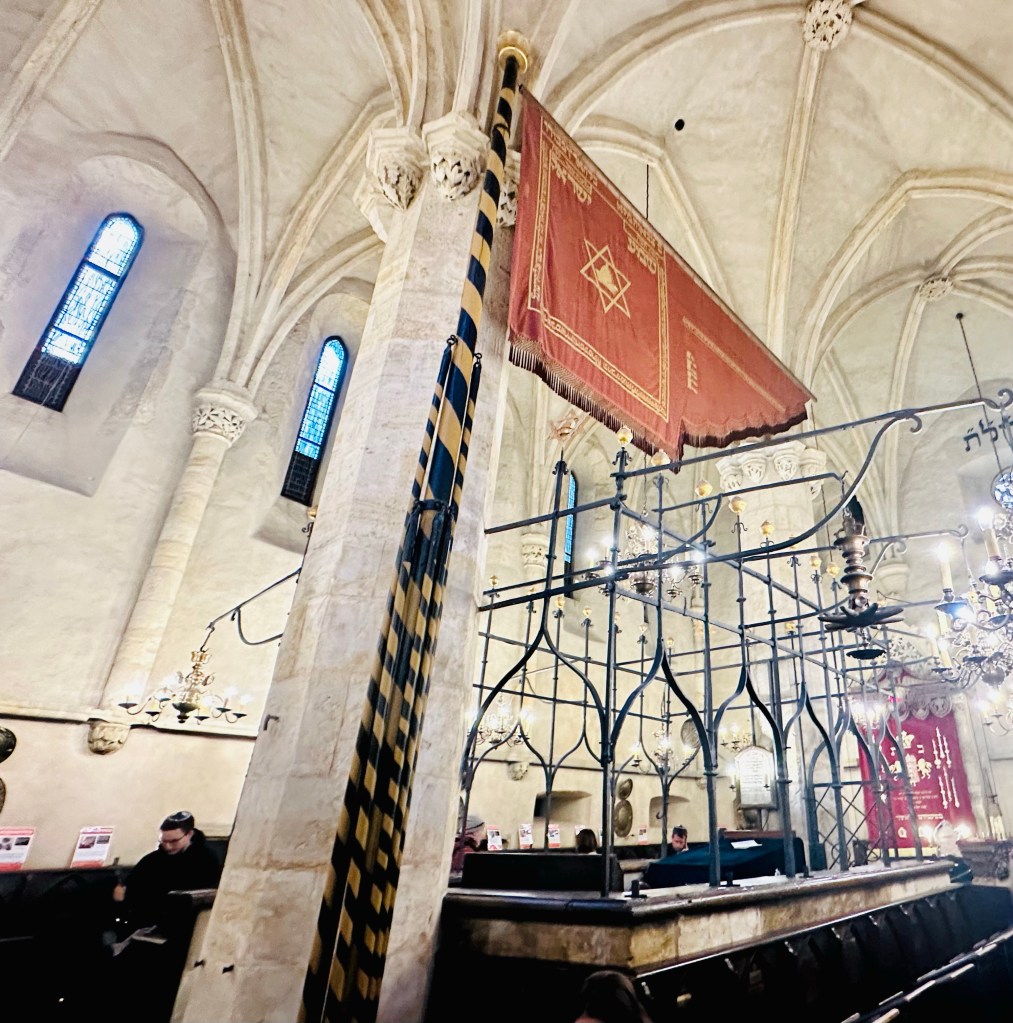
The synagogue itself feels strange inside. Male visitors have to wear the kippah (skullcap) and no one seems to want to speak or look at one another. Current events lend themselves to the oppressive atmosphere, as the past and the present are once again entwined.

The Old Jewish Cemetery is among the oldest surviving Jewish burial grounds in the world and along with the Old-New Synagogue, it is the most important site in the Jewish area of Prague.
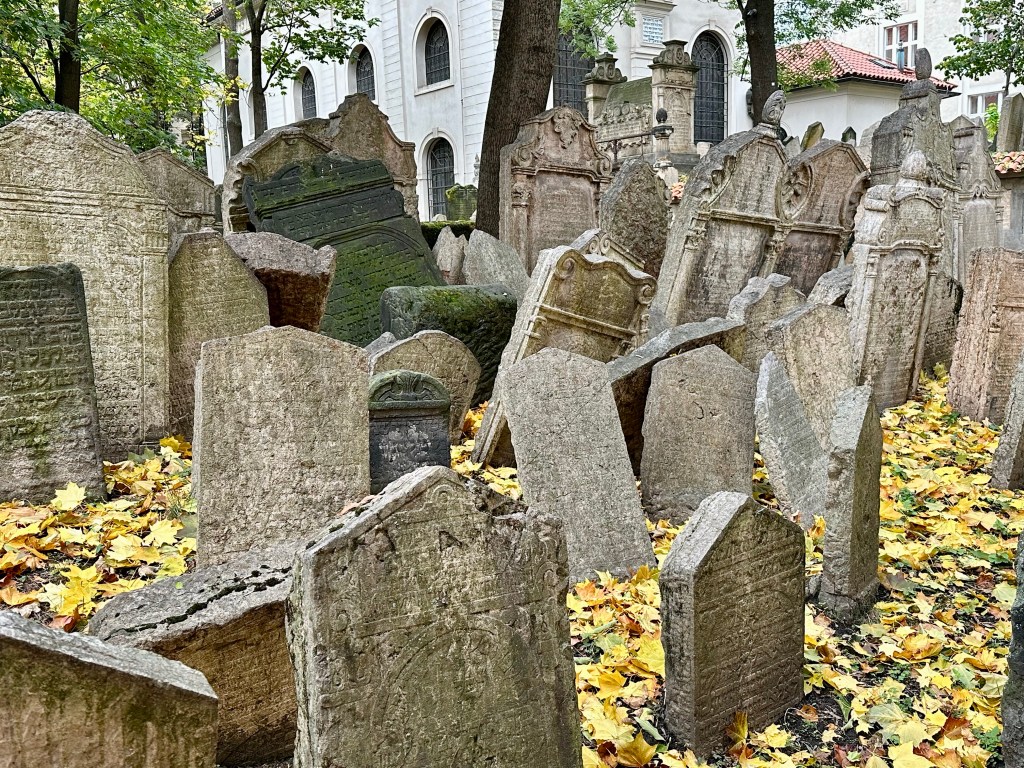
It was founded in the first half of the 15th century with the earliest tombstone dates back to 1439. The last burial took place 348 years later. Although the cemetery was expanded several times over the centuries, it was still not big enough to meet the needs of the Jewish Town.
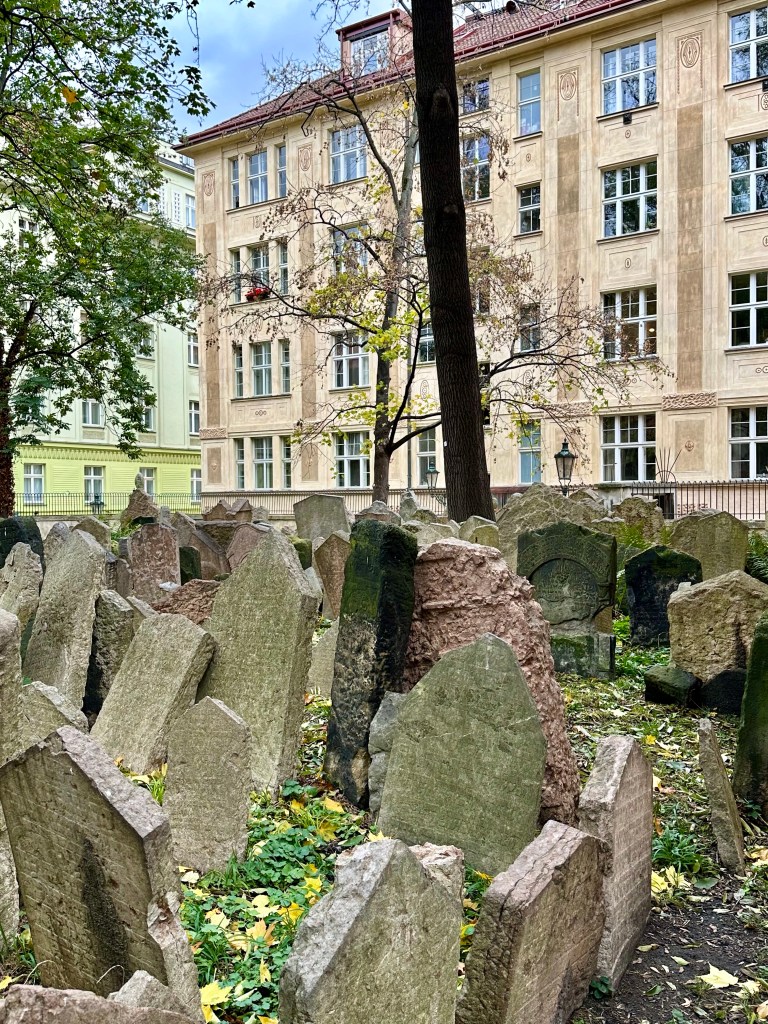
As space was scarce, bodies were buried on top of each other as you can see from the stones and many layered up to 10 bodies deep.There are about 12,000 tombstones in the cemetery in total.
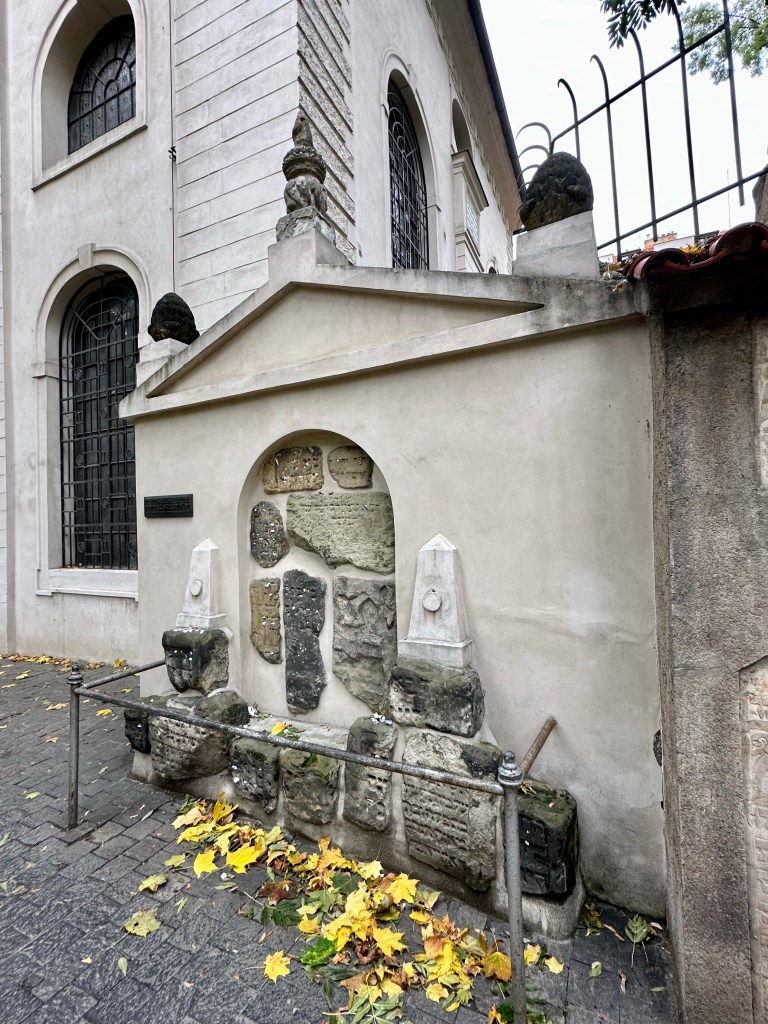
One of the most notable of graves within, belongs to Rabbi Löw of Prague, a scholar and expert in Judaic mysticism. He is also the man behind the creation of the Golem of Prague – more on that later! Today, you can see rolled up pieces of paper pushed into the stonework of the burial site, filled with the dreams of visitors who want to see a wish come true, hoping the Rabbi’s magicial powers can reach beyond the grave.
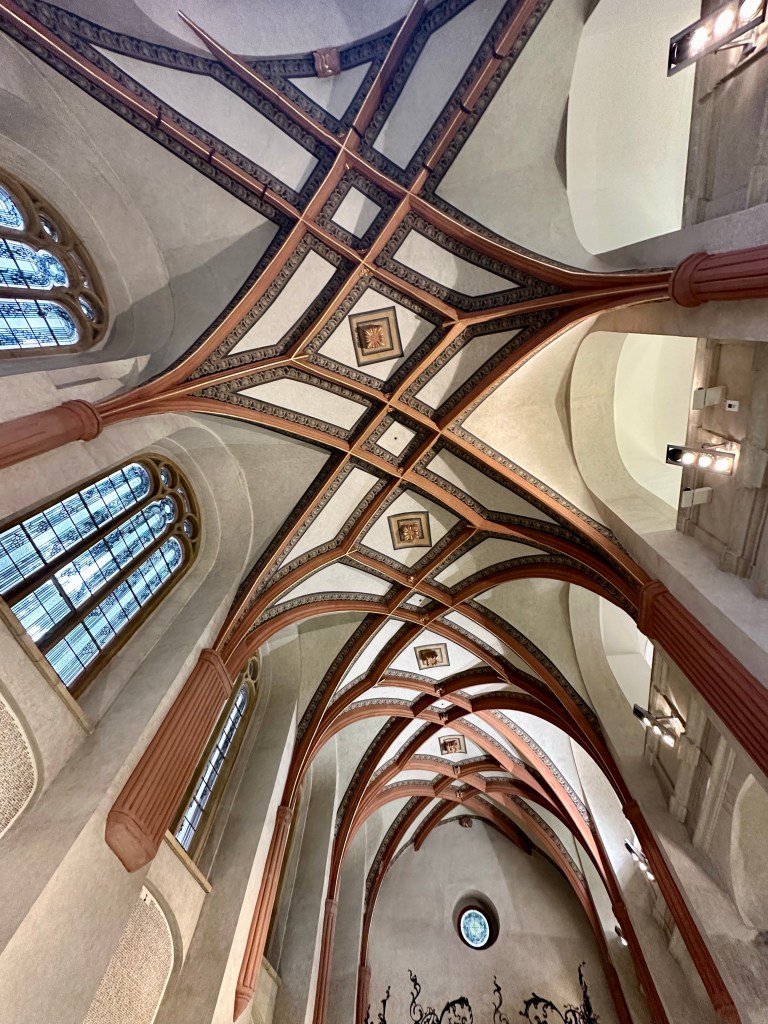
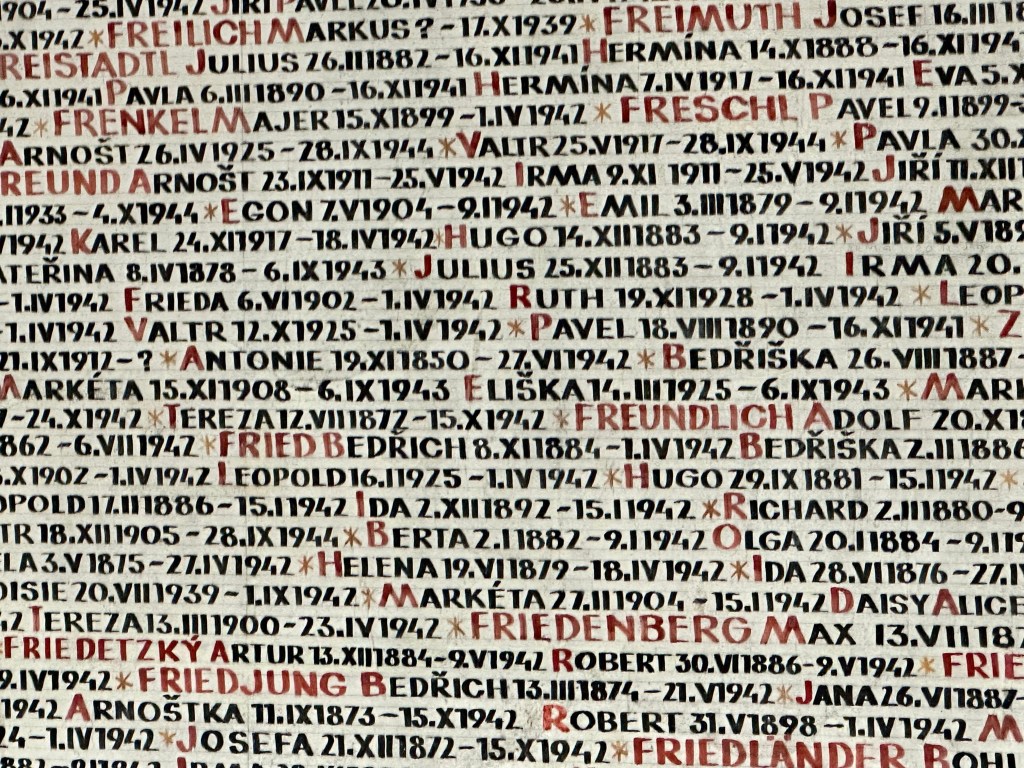
Within the Jewish museum, are the names of those lost during the Holocaust, names etched in the very walls. The museum shows items from those doomed to travel by train to the concentration camps, including a suitcase and a wooden, makeshift Hanukkah candle.


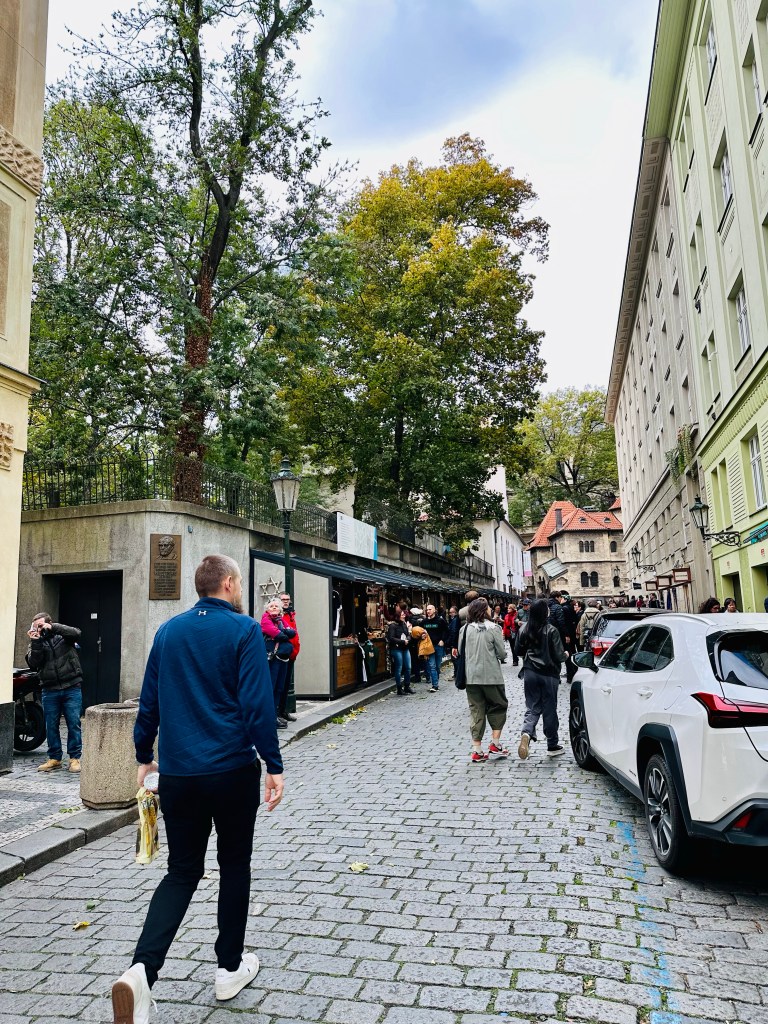
Overall the three locations are infused with an air of darkness, a heavy weight that just doesn’t seem to lift until the last few feet of the cemetery path. The walls seem to want to keep their secrets and the sensation of long-suffering is unyielding. A sharp contrast to the tourist aimed souvenir stores and market stalls that line the pavement surrounding the small place of worship.
 DARK EMERALD TALES & TRAVELS