
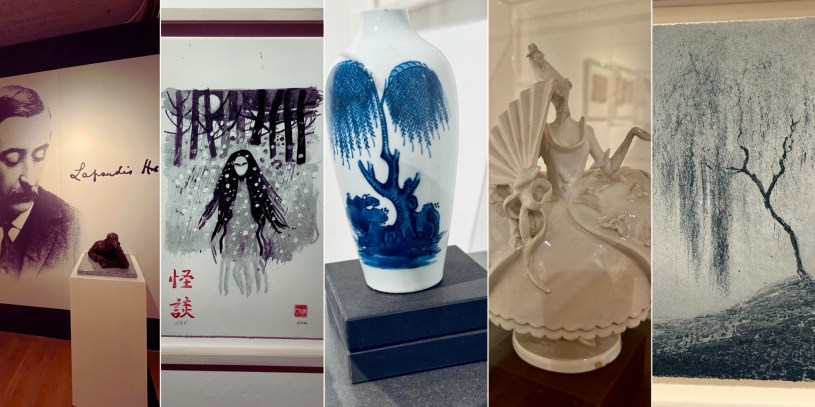
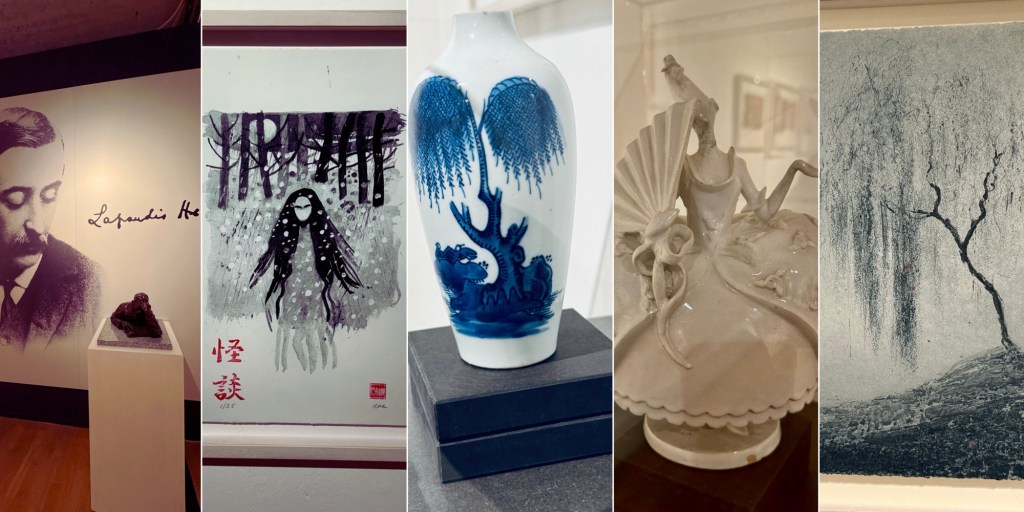
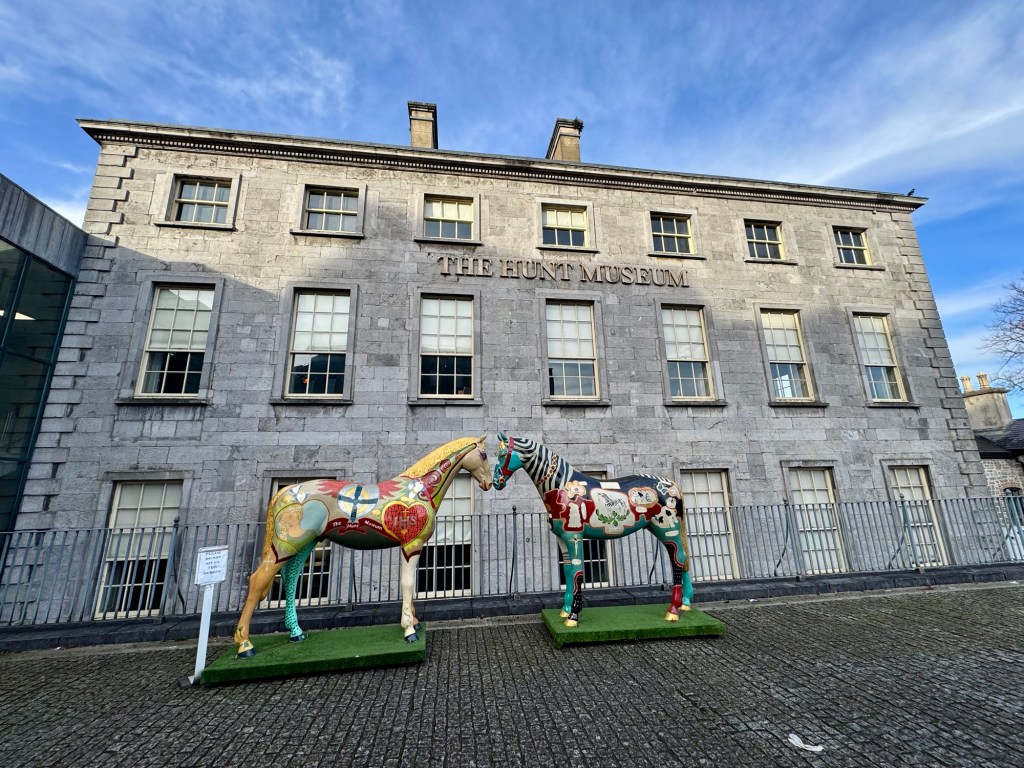
On a whim, I decided to visit The Hunt Museum, a cultural gem in the heart of Limerick City. Housed in a stunning 18th-century former Custom House, the museum is known for its remarkable collection of art and antiquities. But this time, it was the latest exhibition that drew me in—one that perfectly embraced my love of ghosts and folklore.
I was drawn to a world of spectral beauty and supernatural storytelling with Kwaidan – Encounters with Lafcadio Hearn. Running until February 22, 2025, this exhibition presents a captivating artistic interpretation of Hearn’s ghostly tales.
The collection features works by 20 Japanese and 20 Irish artists, each offering a unique visual perspective on Hearn’s eerie narratives. Through contemporary prints and photography, the exhibition breathes new life into Hearn’s haunting folklore – bridging the cultural heritage of Ireland and Japan.
The Origins of a Ghostly Collaboration
The project begin in 2017 when Irish artist Stephen Lawlor exhibited a collection in Tokyo inspired by Ireland’s W.B. Yeats. While in Japan, he encountered the works of Lafcadio Hearn and became captivated by their depth and mystery. Alongside fellow artists Kate MacDonagh and Ed Miliano, Lawlor conceived this exhibition as a way to reimagine Hearn’s supernatural stories through modern art.
Hearn was an Irish-Greek writer who adopted the name Koizumi Yakumo in Japan, dedicated much of his life to collecting and retelling Japanese ghost stories. His work has left an indelible mark on literature and culture, making this exhibition both a tribute to his legacy and a celebration of creative exchange between Ireland and Japan.
Lafcadio Hearn: The Storyteller of Japan’s Ghostly Soul
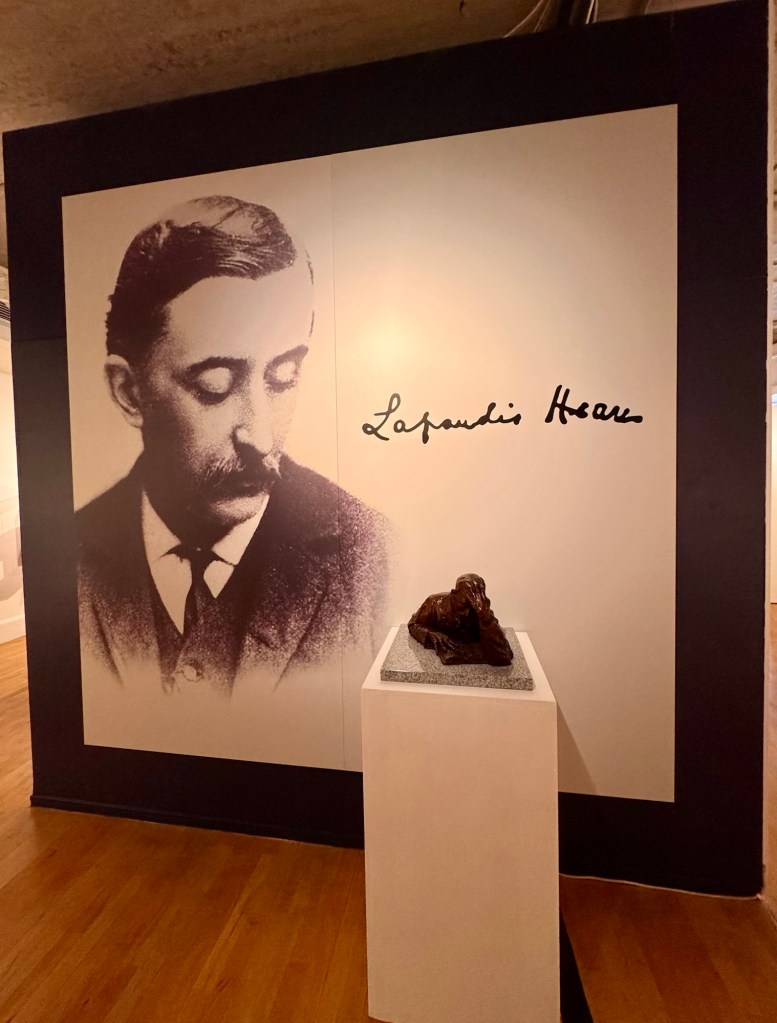
Born in 1850 to an Irish father and a Greek mother, Lafcadio Hearn led a life of exploration, questing to sate his appetite for new cultures. From Ireland to England, France to the United States and the West Indies to Japan, he absorbed the cultures and folklore of every place he encountered.
It was Japan however that truly captured his heart and defined his legacy. After settling there in 1890, he married Setsu Koizumi, the daughter of a samurai family, and became deeply immersed in the country’s traditions.
A Master of Japanese Ghost Stories
Hearn’s fascination with Kaidan—traditional Japanese ghost stories—led to the creation of some of the most hauntingly beautiful collections of supernatural folklore. His books, including ‘Kwaidan: Stories and Studies of Strange Things’ and ‘In Ghostly Japan,’ weave eerie tales of vengeful spirits, mysterious disappearances, and otherworldly encounters. Through his vivid writing, he masterfully captured the very essence of Japanese mythology and shared them with the world.
Lafcadio Hearn remains one of the most influential Western writers on Japan of all time. His ability to bridge cultures through storytelling has inspired countless artists, filmmakers, and writers. His ghost stories in particular, continue to captivate – ensuring that the ethereal beauty of Japanese folklore endures.
Echoes of the Supernatural
To fully appreciate the essence of Kwaidan – Encounters with Lafcadio Hearn, we must delve into the haunting stories that inspired it. Here are some of his most chilling tales:

- Mujina -A traveler encounters a weeping woman on a dark road near Akasaka. When he approaches, she turns to reveal a smooth, featureless face. Fleeing to a tea house, he tells his story—only to realize the tea house owner has no face either.
- Rokuro-Kubi – A wandering samurai takes shelter at an inn, only to discover that his hosts are supernatural beings whose heads detach from their bodies at night. As he attempts to escape, he slays their headless bodies, but one severed head curses him with its dying breath.
- Jikininki – A Buddhist priest witnesses a ghastly creature devouring a corpse. He later learns that the creature was once a greedy priest, cursed for his selfishness to an eternity of consuming the dead.
- Mimi-nashi Hōichi (Hōichi the Earless) – A blind musician performs for ghostly samurai, unaware that they are spirits. To protect him, a priest covers his body in sacred sutras—except for his ears. When the spirits return, they rip his ears off as proof of his presence before vanishing.

- Yuki-onna – A young woodcutter survives an encounter with the Snow Woman, who kills his master but spares him on the condition that he never speaks of it. Years later, he unwittingly reveals the secret to his wife—who then vanishes, revealing herself to have been Yuki-onna all along.
- Horai – This is a dreamlike tale of a mythical land untouched by sorrow or decay. This paradise is visible only to those with pure hearts, but as outsiders lose their innocence, its beauty fades, leaving behind an ordinary landscape.
A Celebration of Folklore and Art
The Kwaidan – Encounters with Lafcadio Hearn exhibition at The Hunt Museum is a portal into the spectral world of Hearn’s imagination. By blending Irish and Japanese artistic traditions, the exhibition highlights the universal power of folklore and storytelling. For anyone drawn to myths, legends, and the supernatural, this is a rare opportunity to experience Hearn’s haunting tales through an enchanting visual lens.
As the Ireland essayist and researcher for Wayward, a supernatural comic that weaves Irish and Japanese folklore through the journey of a young heroine, I’ve seen first-hand how powerful these legends can be when brought together.
That said, there is only one true forefather of bringing Japanese folklore to the wider audience and that is Lafcadio Hearn. His work laid the foundation for us to be able to enjoy so many modern interpretations of these spooky Japanese stories.
So if you’re drawn to the mystical and the macabre, don’t miss the chance to experience it for yourself. Head to the Hunt Museum this week and step into the shadows of history—where ghosts, legends, and whispers of the past come to life. Remember, you only have until Saturday 22 February!
 DARK EMERALD TALES & TRAVELS