
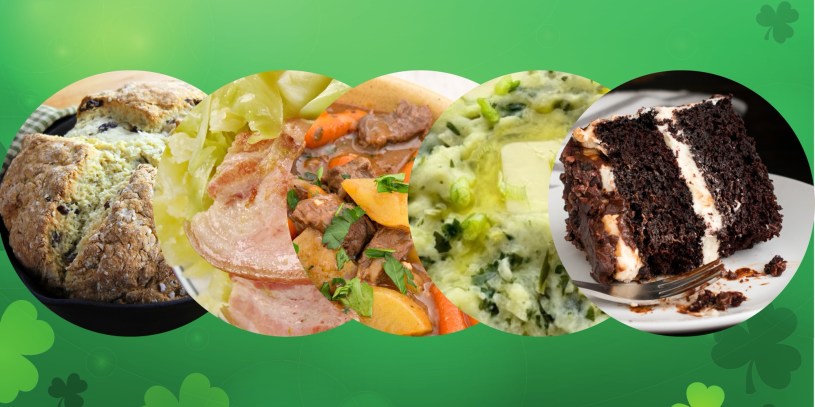

St. Patrick’s Day is more than just parades and pints of Guinness—it’s also a celebration of Irish culture, heritage, and, of course, food. Irish cuisine is known for its simplicity, hearty ingredients, and rich flavors. Many traditional dishes stem from Ireland’s agricultural past, where potatoes, dairy, and meats played a central role in daily life.
Whether you’re hosting a St. Patrick’s Day feast or just want to bring a little Irish charm to your kitchen, these five classic recipes will transport you straight to the Emerald Isle.
1. Boiled Bacon and Cabbage
A true taste of Irish home cooking

Boiled bacon and cabbage is one of Ireland’s most traditional dishes, enjoyed for generations as a comforting, simple meal. Unlike the crispy bacon Americans are used to, Irish bacon is closer to ham. Traditionally, this dish was popular because it made use of readily available ingredients: salted pork, potatoes, and cabbage. Some say it’s the original Irish-American corned beef and cabbage, which became popular in the U.S. due to Irish immigrants substituting corned beef for bacon.
Ingredients (serves 4)
- 1 kg (2.2 lbs) Irish bacon or unsmoked ham
- 1 head of cabbage, sliced (I also add leeks to mine for extra flavour!)
- Potatoes, peeled and quartered (Roosters or Maris Pipers – US Yukon Gold)
- 1 bay leaf
- Black peppercorns (whole)
- A few cloves
- Water (or Bulmers cider for more flavour – Coca Cola works too!)
Instructions
- Place the bacon in a large pot and cover with water or cider and water. Add the bay leaf, cloves and black pepper.
- Bring to a boil, then reduce heat and simmer for about 1.5 hours, skimming off any foam.
- Unless you have a big saucepan, put the potatoes in a separate pot of boiling salted water, reduce to simmer and cook for 20 minutes or until tender.
- Remove the bacon (temp should be 75°C (167°F)) and wrap in foil.
- Add the cabbage (and leeks) to the bacon water and cook for an additional 15 minutes until tender.
- Slice the bacon and serve with your potatoes and cabbage!
Traditional Irish Parsley Sauce
The perfect accompaniment to boiled bacon

Parsley sauce is a classic Irish condiment, especially served with boiled bacon and cabbage. It’s a simple, creamy white sauce infused with fresh parsley, adding a mild, herby flavour that perfectly balances the saltiness of the bacon. This sauce has been a staple in Irish kitchens for generations!
Ingredients
- 30g (2 tbsp) butter
- 30g (¼ cup) all-purpose flour
- 500ml (2 cups) whole milk
- 1 tsp Dijon mustard (I add for extra depth)
- 1 bay leaf
- Salt and white pepper, to taste
- 4 tbsp fresh parsley, finely chopped
Instructions
- In a saucepan, melt the butter over medium heat. Stir in the flour and cook for about 1 minute, stirring constantly to form a roux (a smooth paste).
- Gradually add the milk, whisking continuously to avoid lumps. If using a bay leaf, add it now for extra flavor.
- Bring to a gentle simmer, stirring occasionally, until the sauce thickens (about 5 minutes). Remove the bay leaf.
- Stir in the Dijon mustard (if using), salt, and white pepper.
- Add the chopped parsley and mix well.
- Serve warm over boiled bacon and cabbage.
This velvety sauce is also delicious with fish, potatoes, or even drizzled over vegetables. Enjoy your bacon the traditional Irish way!
2. Colcannon
Mashed potatoes with an Irish twist

Colcannon is a comforting dish of mashed potatoes mixed withcabbage. Traditionally eaten on Halloween in Ireland, it sometimes had coins or a charm hidden inside it!
Ingredients
- 900g (2 lbs) potatoes, peeled and chopped (Maris Pipers or Yukon Gold for USA)
- 300g (3 cups) cabbage, chopped
- 120ml (½ cup) milk (add a splash of cream if you are feeling indulgent!)
- 60g (¼ cup) butter, plus extra for serving
- 2 spring onions (scallions), finely chopped
- Salt and black pepper to taste
- I add a grating of nutmeg for extra flavour!
Instructions
- Boil potatoes in salted water until tender. Drain and mash.
- Meanwhile, cook the cabbage in a pan with a bit of water for about 10 minutes until softened. Drain.
- Heat milk and butter together, then mix into the mashed potatoes.
- Stir in the cabbage and spring onions, seasoning to taste.
- Serve warm with a pat of butter melting on top.
3. Irish Soda Bread
No yeast, still a feast!
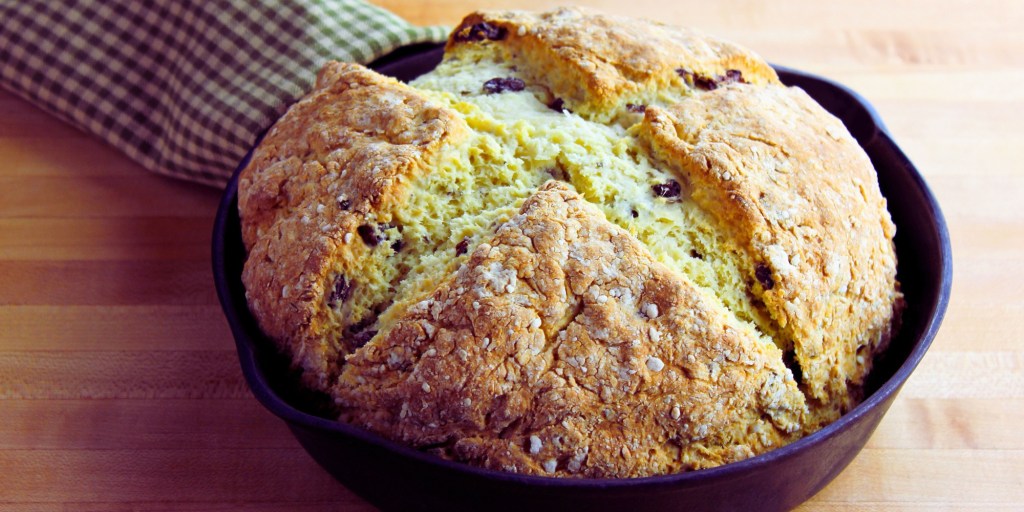
Irish Soda Bread dates back to the 1800s when baking soda became available in Ireland. Since yeast was scarce, soda bread became a staple, especially in rural households. Traditionally, a cross was cut on top of the bread to ward off evil spirits and bless the home.
Ingredients
- 500g (4 cups) all-purpose flour
- 1 tsp baking soda
- 1 tsp salt
- 400ml (1 ¾ cups) buttermilk
Instructions
- Preheat oven to 200°C (400°F). Line a baking tray with parchment paper.
- In a large bowl, whisk together flour, baking soda, and salt.
- Gradually add the buttermilk, mixing until a dough forms.
- Turn onto a floured surface, knead lightly, and shape into a round loaf.
- Place on the tray and cut a deep cross on top.
- Bake for 35-40 minutes or until the bread sounds hollow when tapped on the bottom.
- Cool on a wire rack before slicing.
4. Irish Stew
A dish fit for a chieftain

Irish Stew is Ireland’s national dish, dating back centuries. Traditionally made with mutton, potatoes, and onions, it was a practical meal for farmers and herdsmen. Modern versions often use lamb, making it even more tender and flavoursome.
Ingredients
- 1 kg (2.2 lbs) lamb shoulder, cut into chunks (if lamb is not your thing then beef is fine but not traditional!)
- 1.5kg potatoes, peeled and diced (Roosters or Yukon Gold for USA)
- 2 carrots, chopped
- 1 onion, chopped (I also add leek!)
- 750ml (3 cups) beef or lamb stock
- 1 bay leaf
- 1 tsp fresh thyme (or use a Bouquet Garni if you want)
- Salt and pepper to taste
Instructions
- Heat a large pot over medium heat. Brown the lamb pieces in batches, then set aside. (Works great in a slow cooker!)
- In the same pot, cook the onion and carrots for a few minutes.
- Add the lamb back in, along with potatoes, bay leaf, thyme, and stock.
- Bring to a boil, then reduce heat and simmer for 2 hours until the meat is tender.
- Remove the bay leaf, season to taste, and serve hot with soda bread.
5. Guinness Chocolate Cake
A sweet treat with a dark twist

Guinness and chocolate are a match made in heaven! This rich, moist cake has a deep flavor thanks to the depth of the Guinness, which enhances the chocolate’s intensity. The predecessor would be the traditional porter cake which is heavier and filled with dried fruits. This is a lighter and more luxurious alternative!
Ingredients
- 250ml (1 cup) Guinness stout
- 250g (1 cup) unsalted butter
- 75g (¾ cup) cocoa powder
- 400g (2 cups) sugar
- 2 eggs
- 120ml (½ cup) sour cream
- 1 tsp vanilla extract
- 250g (2 cups) all-purpose flour
- 2 ½ tsp baking soda
For the frosting (not traditional but very tasty!):
- 200g (1 ½ cups) cream cheese (mascarpone works well)
- 125g (1 cup) icing sugar (powdered)
- 120ml (½ cup) double cream (heavy)
- For extra indulgence add some Baileys Irish Cream and just half your double cream amount!
Instructions
- Preheat oven to 180°C (350°F). Grease a round cake pan.
- Heat Guinness and butter in a saucepan until melted. Remove from heat, whisk in cocoa and sugar.
- In another bowl, whisk eggs, sour cream, and vanilla, then mix into the Guinness mixture.
- Sift in flour and baking soda, folding gently.
- Pour into the pan and bake for 45 minutes. Pierce with a skewer – it should come out clean. Cool before frosting.
- Slice cake in half.
- For the frosting, beat cream cheese and icing sugar, then add double cream and optional Baileys Irish Cream. Spread over half the cooled cake. Add the top layer and cover with the remaining frosting.
- For an extra finish, grate some dark chocolate (I use Butlers) over the top.
Celebrate St. Patrick’s Day the Irish Way!

These five traditional Irish recipes capture the heart and soul of Ireland’s culinary heritage. Whether you’re cooking a simple colcannon or indulging in a Guinness chocolate cake, each dish brings a bit of Irish history and folklore to your St. Patrick’s Day table.
So, gather your loved ones, raise a glass, and enjoy the feast— maybe a glass of Irish Coffee? Sláinte!
 DARK EMERALD TALES & TRAVELS